Commercial Truck Accidents in Michigan: Federal FMCSA Regulations, Black Box Data & Vicarious Liability
A legal investigation into semi-truck and freight collisions in Michigan: Federal FMCSA Hours of Service violations, downloading ECM 'Black Box' data, emergency spoliation letters, and multi-million-dollar carrier liability.
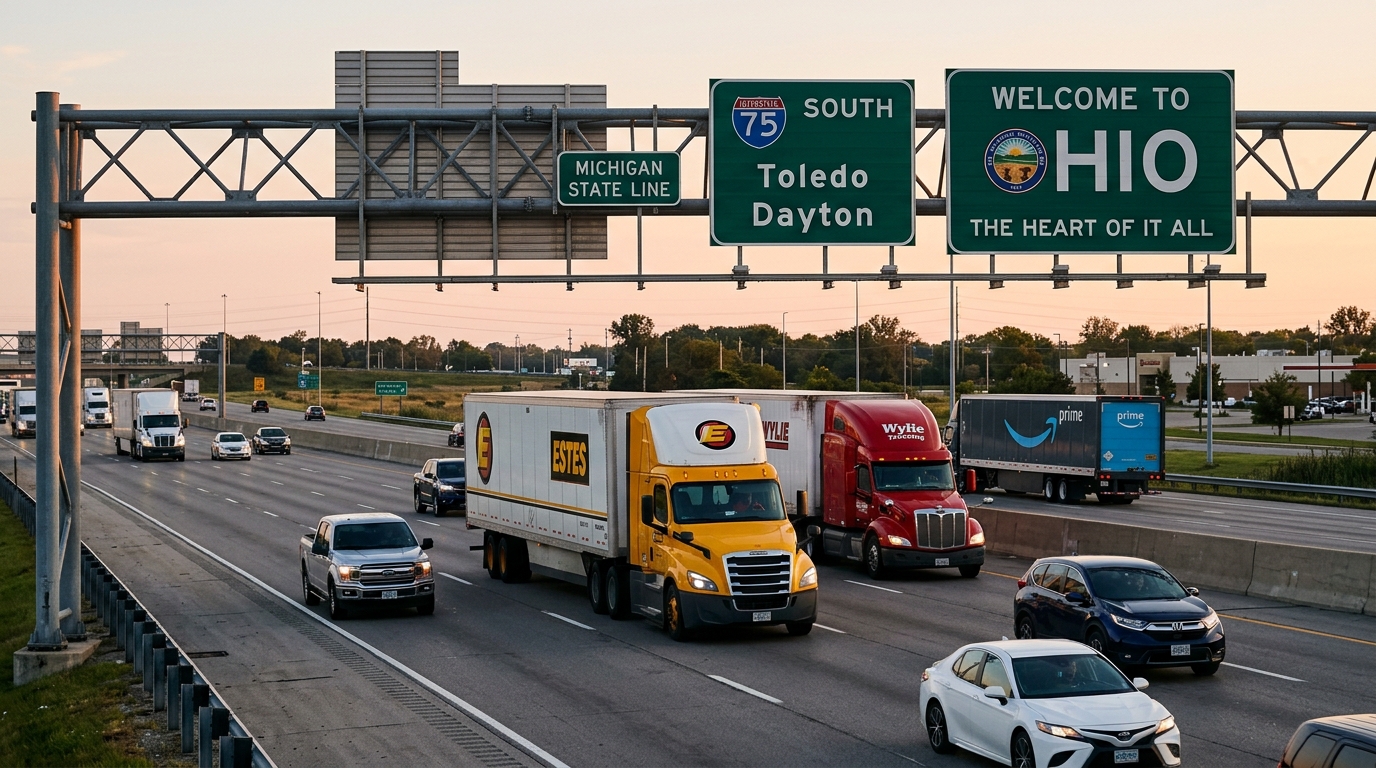
With Michigan serving as the premier manufacturing gateway between the United States and Canada, our highway corridors—particularly Interstate 94, Interstate 75, Interstate 96, and Interstate 696—carry some of the densest commercial freight traffic in the world. Every day, thousands of 80,000-pound tractor-trailers, steel-hauling flatbeds, automotive parts carriers, and cross-border logistics trucks traverse the Ambassador Bridge, the Gordie Howe corridor, and regional interstates.
When a collision occurs between an 80,000-pound commercial semi-truck and a 3,500-pound passenger sedan, the physical consequences are catastrophic: crushed vehicle frames, closed traumatic brain injuries, spinal severance, and fatalities.
However, litigating a commercial truck accident in Michigan is radically different from resolving an ordinary car crash.
Truck accident litigation is not simply governed by Michigan’s state No-Fault rules. It is governed by an expansive web of federal administrative mandates enforced by the Federal Motor Carrier Safety Administration (FMCSA), computerized telematics data, multi-layered corporate liability structures, and multi-million-dollar commercial insurance syndicates.
This comprehensive legal manual details the critical regulatory standards, explains why sending an immediate spoliation letter is paramount, details how to extract “Black Box” data, and outlines how victims recover multi-million-dollar settlements under Michigan law.
Bottom Line Up Front (BLUF): Michigan Commercial Truck Litigation
• Primary Regulatory Body: Federal Motor Carrier Safety Administration (FMCSA — 49 CFR Parts 300–399).
• Minimum Commercial Insurance: $750,000 to $5,000,000+ mandatory federal liability policy limits.
• Key Critical Action: Serve an immediate Spoliation of Evidence Letter within 48–72 hours to prevent Black Box and ELD data overwriting.
• Common Regulatory Violation: Violating the 11-hour driving / 14-hour on-duty Hours of Service (HOS) rules under 49 CFR Part 395.
• Legal Liability Structure: Claims can target the driver, the trucking company (respondeat superior), the freight broker, and third-party maintenance contractors.
1. Federal Regulations (FMCSA) vs. Michigan State Law
While passenger vehicle collisions are governed by the Michigan Motor Vehicle Code, commercial trucking operations are governed concurrently by federal safety statutes adopted into state law via the Michigan Motor Carrier Safety Act of 1963 (MCL 480.11 et seq.):
┌────────────────────────────────────────────────────────────────────────┐
│                   KEY FMCSA REGULATORY COMPLIANCE AREAS                │
├─────────────────────────────────────┬──────────────────────────────────┤
│ 49 CFR Part 382: Drug & Alcohol     │ Mandatory pre-employment, random,│
│                                     │ and post-accident toxic testing. │
├─────────────────────────────────────┼──────────────────────────────────┤
│ 49 CFR Part 383: CDL Standards      │ Commercial driver licensing,     │
│                                     │ medical examiner certificates.   │
├─────────────────────────────────────┼──────────────────────────────────┤
│ 49 CFR Part 391: Driver Quals       │ Driver Qualification Files (DQF),│
│                                     │ background driving record audits.│
├─────────────────────────────────────┼──────────────────────────────────┤
│ 49 CFR Part 395: Hours of Service   │ Electronic Logging Devices (ELD),│
│                                     │ maximum driving hour limits.     │
├─────────────────────────────────────┼──────────────────────────────────┤
│ 49 CFR Part 396: Inspection & Maint │ Daily vehicle inspection reports │
│                                     │ (DVIR), brake/tire maintenance.  │
└─────────────────────────────────────┴──────────────────────────────────┘
Proving that a motor carrier or driver violated any of these federal regulations constitutes evidence of negligence per se in a Michigan civil trial, establishing immediate liability before a jury.
2. Digital Forensic Evidence: The ECM “Black Box” and ELD
Modern commercial semi-trucks are complex mobile computers equipped with sophisticated electronic monitoring systems that record objective physical data seconds before, during, and after an impact:
A. The Engine Control Module (ECM / Black Box)
The truck’s internal engine computer captures continuous telemetry: * Exact vehicle speed in 1-second intervals prior to impact. * Throttle position (was the driver accelerating or coasting?). * Brake application status (did the driver hit the air brakes, or did they crash without braking?). * Hard braking events, clutch status, and steering angle adjustments. * Diagnostic trouble codes (DTCs) indicating mechanical defects or brake failure.
B. Electronic Logging Devices (ELD)
Since the federal ELD mandate took effect, paper logbooks are obsolete. Electronic logging devices connect directly to the truck’s engine to record: * Duty status transitions (Driving, On-Duty, Sleeper Berth, Off-Duty). * GPS location stamps every 60 minutes while operating. * Total continuous driving hours, pinpointing illegal driver fatigue and HOS violations.
3. The Critical Threat: Evidence Spoliation and the 30-Day Overwrite
Commercial trucking companies employ aggressive Rapid Response Defense Teams. Within hours of a serious highway crash on I-94 or I-75, defense investigators, insurance adjusters, and specialized defense attorneys are dispatched directly to the accident scene to inspect the tractor-trailer, photograph skid marks, and protect the motor carrier from liability.
Why You Must Act Immediately
Many commercial digital telematics systems (e.g., Omnitracs, Peoplenet, Qualcomm) and dashcam camera systems are configured to automatically overwrite digital data every 14 to 30 days, or as soon as the truck is restarted and driven again:
[Crash Occurs] ── (Days 1–3) ──► [Plaintiff Attorney Sends Formal Spoliation Letter]
                                            │
                                            ▼
[Legal Duty to Preserve Attaches] ── Carrier Must Download ECM & Retain ELD/Video
                                            │
                                            ▼ (If Ignored / Deleted)
[Michigan Court Issues Spoliation Sanctions: Adverse Inference Jury Instruction]
To prevent this data from vanishing, an experienced Michigan truck accident attorney must immediately draft and serve a comprehensive Spoliation of Evidence Letter via certified mail and electronic process.
Once served, the motor carrier has a strict legal duty to preserve: 1. The tractor and trailer in their unrepaired, post-crash physical condition. 2. The complete raw ECM/EDR binary download file. 3. 30 days of prior ELD telematics data and supporting shipping bills of lading. 4. The driver’s complete Driver Qualification File (DQF), including annual driving reviews and physical medical examiner certificates. 5. In-cab outward-facing and inward-facing dashcam video feeds.
If the trucking company destroys or overwrites this data after receiving a spoliation letter, Michigan courts will instruct the jury that the destroyed evidence is presumed to have proven the trucking company’s liability.
4. Multi-Party Corporate Liability: Who Pays the Damages?
In a standard passenger car accident, you sue the individual driver. In commercial freight litigation, liability frequently extends across multiple corporate entities:
A. The Motor Carrier (Respondeat Superior)
Under the legal doctrine of respondeat superior, an employer is vicariously liable for the negligent acts of its employees committed within the scope of their employment. Furthermore, trucking companies can be sued directly for negligent hiring, negligent training, and negligent supervision if they hired a driver with a record of DUI convictions, chronic safety violations, or sleep apnea.
B. Freight Brokers and Shippers
Third-party logistics brokers (e.g., C.H. Robinson, TQL) that arranged the shipment can be held liable if they contracted with a motor carrier known to hold an “Unsatisfactory” or “Conditional” FMCSA safety rating simply to save on freight rates.
C. Third-Party Maintenance and Repair Facilities
If the crash was caused by air brake failure, tire tread separation (blowout), or steering malfunction, independent maintenance facilities that inspected or improperly serviced the vehicle can be joined as co-defendants.
5. Commercial Insurance Limits & Settlement Realities
Because commercial semi-trucks represent immense destructive potential, the federal government mandates substantial financial responsibility under 49 CFR Part 387:
- Standard Non-Hazardous Freight: Minimum $750,000 primary liability limit.
- Oil, Hazardous Waste, Large Machinery: Minimum $1,000,000 primary liability limit.
- Hazardous Materials (Hazmat / Explosives): Minimum $5,000,000 primary liability limit.
- Commercial Umbrella / Excess Policies: Major regional and national freight fleets routinely carry $10 Million to $50 Million in excess umbrella layers.
Navigating these multi-layered corporate policies requires skilled forensic accident reconstruction, certified ECM downloads, and rigorous federal regulatory depositions to ensure crash victims recover the full measure of justice they deserve.
Frequently Asked Questions (FAQ)
What federal regulations govern commercial semi-trucks in Michigan?
Commercial motor vehicles operating in interstate commerce through Michigan are governed by the Federal Motor Carrier Safety Administration (FMCSA) regulations (Title 49 of the Code of Federal Regulations / 49 CFR). Intrastate motor carriers are governed by the Michigan Motor Carrier Safety Act (Public Act 181 of 1963), which incorporates federal safety, inspection, and hours-of-service standards.
What is an emergency spoliation letter in a Michigan truck accident?
An emergency spoliation of evidence letter is a formal legal demand served on the trucking company and its insurer immediately following a collision. It legally compels the carrier to preserve vital digital and physical evidence—including Electronic Control Module (ECM/Black Box) data, Electronic Logging Device (ELD) hours-of-service records, dashcam videos, maintenance logs, and driver drug testing results—prohibiting routine corporate overwriting.
What are the federal Hours of Service (HOS) rules for truck drivers in Michigan?
Under 49 CFR Part 395, property-carrying commercial drivers are subject to strict limits: (1) Maximum 11 hours of driving after 10 consecutive hours off-duty; (2) May not drive beyond the 14th consecutive hour after coming on duty; (3) Mandatory 30-minute break after 8 cumulative hours of driving; and (4) Cannot drive after 60 hours on duty in 7 consecutive days (or 70 hours in 8 days).
Who can be held legally liable in a Michigan commercial truck crash?
Under Michigan tort law and federal regulations, liability can extend beyond the truck driver to multiple entities: (1) The Motor Carrier (trucking company) under respondeat superior and vicarious liability; (2) The Freight Broker or Shipper for negligent hiring; (3) The Cargo Loading Facility for unbalanced or shifting loads; (4) Third-party maintenance contractors for brake or tire failures; and (5) Equipment manufacturers for mechanical defects.
What are the minimum insurance requirements for commercial trucks in Michigan?
Under FMCSA regulations (49 CFR Part 387), commercial motor carriers must maintain substantial liability insurance policies: $750,000 for standard non-hazardous freight; $1,000,000 for oil and large equipment transport; and $5,000,000 for hazardous materials (hazmat) carriers. Many regional carriers maintain commercial umbrella policies ranging from $10 million to $50 million.
Archival & Citation Notice
This research analysis is published under the academic and civic archive of Detroit Focus. For academic referencing or press reproduction, please cite as: "Commercial Truck Accidents in Michigan: Federal FMCSA Regulations, Black Box Data & Vicarious Liability", Detroit Focus Urban Review (December 29, 2026).