Remote Work & Multi-State Payroll in Michigan: Withholding Certificates, Reciprocity & Unemployment Taxes
A CFO and payroll compliance manual for multi-state employers and Michigan remote workers: Payroll withholding nexus, Michigan Form MI-W4, DOL 4-part SUTA localization tests, and city income tax rules.
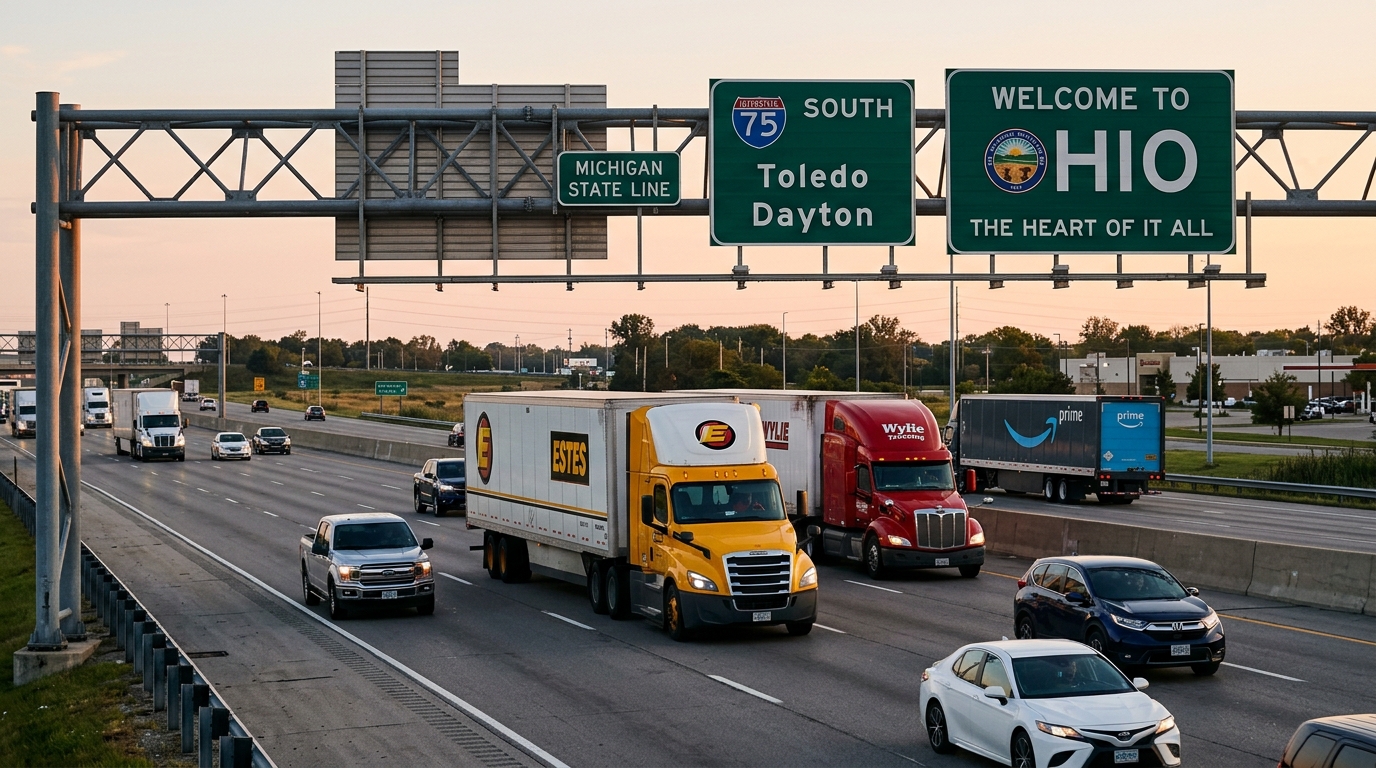
The permanent rise of remote and hybrid employment has fundamentally restructured corporate payroll. For thousands of software engineers, financial analysts, and corporate professionals living in Detroit, Ann Arbor, and Grand Rapids—working for enterprises headquartered in New York, Chicago, San Francisco, or Austin—remote work offers lifestyle flexibility.
However, for corporate human resources directors, CFOs, and payroll managers, hiring an employee in Michigan triggers complex multi-state statutory obligations.
Under Michigan tax jurisprudence and the Michigan Employment Security Act (MCL 421.1 et seq.), a single telecommuting worker establishes physical presence nexus. This mandates state tax registration, creates State Unemployment Tax Act (SUTA) liabilities, triggers worker’s compensation requirements, and complicates municipal income tax calculations.
This technical compliance guide outlines the tax obligations out-of-state employers must satisfy when employing Michigan residents, and what Michigan businesses must manage when deploying remote staff across state lines.
Bottom Line Up Front (BLUF): Multi-State Remote Work in Michigan
• Payroll Withholding: Out-of-state employers must register with Michigan Treasury Online (MTO) and withhold the flat 4.25% state tax via Form MI-W4.
• SUTA Unemployment: Governed by the U.S. DOL 4-Tier Localization Test; if work is localized at a home office in Michigan, SUTA must be paid to Michigan UIA.
• Reciprocal Neighbor States: Reciprocity applies to IL, IN, KY, MN, OH, and WI—wages are taxed exclusively in the employee's state of legal residence.
• City Tax Allocation: Non-resident remote workers are 100% exempt from Detroit's 1.2% city tax for days physically worked outside city boundaries.
• Workers' Comp Insurance: Employers must maintain a Michigan-endorsed workers' disability compensation policy covering the employee's home workspace.
1. Michigan State Income Tax Withholding Nexus
Under the Michigan Income Tax Act of 1967 (MCL 206.351), any employer doing business in Michigan or employing an individual performing services within the state is deemed an “employer” subject to statutory withholding mandates:
- Physical Presence Nexus: When an employee clocks in from a home office located in Michigan, that employee is physically performing labor within Michigan’s sovereign taxing jurisdiction.
- Mandatory Registration: The out-of-state corporation must register for a Michigan Treasury withholding account via Michigan Treasury Online (MTO) at
mto.treasury.michigan.gov. - Form MI-W4: The remote employee must execute Form MI-W4 (Employee’s Michigan Withholding Exemption Certificate) to declare their personal exemptions. The employer must deduct the statutory flat rate of 4.25% from gross taxable wages on every payroll cycle.
2. Multi-State Unemployment (SUTA): The 4-Tier DOL Test
Employers often mistakenly pay State Unemployment Tax (SUTA) to the state where their corporate headquarters is situated. Under federal guidance issued by the U.S. Department of Labor and codified in MCL 421.42, multi-state unemployment liability must be evaluated sequentially using the Four-Tier Localization Test:
[Tier 1: Localization Test] ── Is all or most work performed in one state?
               │ (No)
               ▼
[Tier 2: Base of Operations] ── Where does worker store equipment & start work?
               │ (None)
               ▼
[Tier 3: Place of Direction & Control] ── Where do managers issue instructions?
               │ (None)
               ▼
[Tier 4: State of Residence] ── Worker's legal domicile
- Tier 1 (Localization): If an employee works 100% (or virtually all) of their time from a home office in Michigan, their employment is “localized” in Michigan. SUTA taxes must be paid to the Michigan UIA.
- Tier 2 (Base of Operations): If the worker travels across multiple states but uses their Michigan residence as the home base from which they receive shipments, maintain files, and begin travel, SUTA is paid to Michigan.
- Tier 3 (Direction and Control): If there is no base of operations, taxes are paid to the state from which corporate management exercises operational oversight.
- Tier 4 (Residence): If none of the above tests clearly govern, SUTA is paid to the employee’s state of legal residence.
3. Interstate Reciprocity Agreements (Midwest Neighbors)
Michigan maintains formal reciprocal income tax agreements with six neighboring Midwestern states:
| Reciprocal Partner State | Statutory Form Required | Tax Treatment of Wages |
|---|---|---|
| Illinois | Form MI-W4 / IL-W-5-NR | Taxed solely in resident state; exempt from work state withholding |
| Indiana | Form MI-W4 / Form WH-47 | Taxed solely in resident state; exempt from work state withholding |
| Kentucky | Form MI-W4 / Form 42A809 | Taxed solely in resident state; exempt from work state withholding |
| Minnesota | Form MI-W4 / Form MWR | Taxed solely in resident state; exempt from work state withholding |
| Ohio | Form MI-W4 / Form IT-4NR | Taxed solely in resident state; exempt from work state withholding |
| Wisconsin | Form MI-W4 / Form W-220 | Taxed solely in resident state; exempt from work state withholding |
The Non-Reciprocal Problem: New York & Convenience Rules
If a Michigan remote worker is employed by a firm based in a state with a “Convenience of the Employer” doctrine (such as New York, Nebraska, or Pennsylvania), a severe double-taxation trap can arise. New York taxes 100% of the worker’s wages unless the employer specifically required the employee to work out of state. While Michigan offers a non-resident tax credit under MCL 206.255, differences in tax brackets can leave workers with net tax friction.
4. Municipal Income Taxes: The Detroit Remote Exemption
Michigan is one of a handful of states where cities levy independent local income taxes (24 Michigan cities impose municipal taxes, including Detroit, Grand Rapids, Lansing, and Flint).
The Physical Work Location Standard
Under the City Income Tax Act (Public Act 284 of 1964): * Residents: Residents of Detroit owe a flat 2.40% tax on all earned income, regardless of where they work. * Non-Residents: Non-residents who work for a Detroit-based company are only subject to the 1.20% non-resident city tax on compensation earned for work actually performed within the city. * Remote Days Are 100% Exempt: If a non-resident worker employed by a Detroit tech company works from their suburban home in Oakland County 4 days a week and commutes downtown 1 day a week, 80% of their wages are completely exempt from Detroit city tax. Payroll systems must adjust withholding using a wage-allocation percentage.
5. Corporate Income Tax & Sales Tax Nexus Exposure
Hiring a remote employee in Michigan can trigger unintended corporate tax liabilities:
- Michigan Corporate Income Tax (CIT): Michigan levies a flat 6.0% CIT on traditional C-corporations. Under Michigan Treasury guidelines, having an employee in the state creates physical presence nexus, requiring the out-of-state corporation to apportion business income to Michigan.
- Sales and Use Tax: Having a resident employee can establish sales tax nexus, requiring the out-of-state merchant to register, collect, and remit Michigan’s 6% sales and use tax on sales to Michigan consumers.
To prevent costly exposure, companies should review their remote workforce distribution with specialized state and local tax (SALT) counsel annually.
Frequently Asked Questions (FAQ)
Does an out-of-state employer have to withhold Michigan income tax for a remote worker?
Yes. If an employee resides in Michigan and performs remote work from their home office within the state, the employer has established payroll withholding nexus in Michigan. The employer must register with the Michigan Department of Treasury via Michigan Treasury Online (MTO) and withhold the flat 4.25% state income tax using Form MI-W4.
Which state receives unemployment tax (SUTA) for a remote worker in Michigan?
Under the U.S. Department of Labor’s 4-tier localization test adopted in the Michigan Employment Security Act (MCL 421.42), unemployment tax (SUTA) is paid to Michigan if the remote employee performs all or the primary base of their services from their home residence in Michigan, regardless of where corporate headquarters is located.
Does hiring a single remote worker in Michigan create corporate income tax nexus?
Generally, yes. Having an employee regularly working in Michigan typically establishes physical presence nexus for Michigan Corporate Income Tax (CIT) and Michigan sales tax. However, mere de minimis remote activity strictly limited to solicitation of sales of tangible personal property may be protected under federal Public Law 86-272.
How does Michigan’s tax reciprocity affect remote workers?
Michigan maintains statutory reciprocal tax agreements with six states: Illinois, Indiana, Kentucky, Minnesota, Ohio, and Wisconsin. Under these agreements, residents of reciprocal states who commute or work across borders only pay income tax to their home state of residence, eliminating the need to file non-resident tax returns in the work state.
Do remote employees working outside Detroit owe Detroit city income tax?
Under Michigan’s City Income Tax Act (MCL 141.601 et seq.), non-resident employees of Detroit-based companies only owe the 1.2% non-resident city tax on wages earned for days physically worked within the municipal borders of Detroit. Days worked remotely from a suburban home (e.g., Troy, Ann Arbor, or Grand Rapids) are 100% exempt from Detroit city tax.
Archival & Citation Notice
This research analysis is published under the academic and civic archive of Detroit Focus. For academic referencing or press reproduction, please cite as: "Remote Work & Multi-State Payroll in Michigan: Withholding Certificates, Reciprocity & Unemployment Taxes", Detroit Focus Urban Review (November 05, 2026).