DTE & Consumers Energy Rate Hikes 2026: MPSC Approvals, Peak Hour Tariffs & Bill Relief Programs
Comprehensive analysis of Michigan utility rate adjustments approved by the MPSC. Navigate DTE and Consumers Energy peak-hour tariffs, Winter Protection Plan safeguards, and state utility relief.
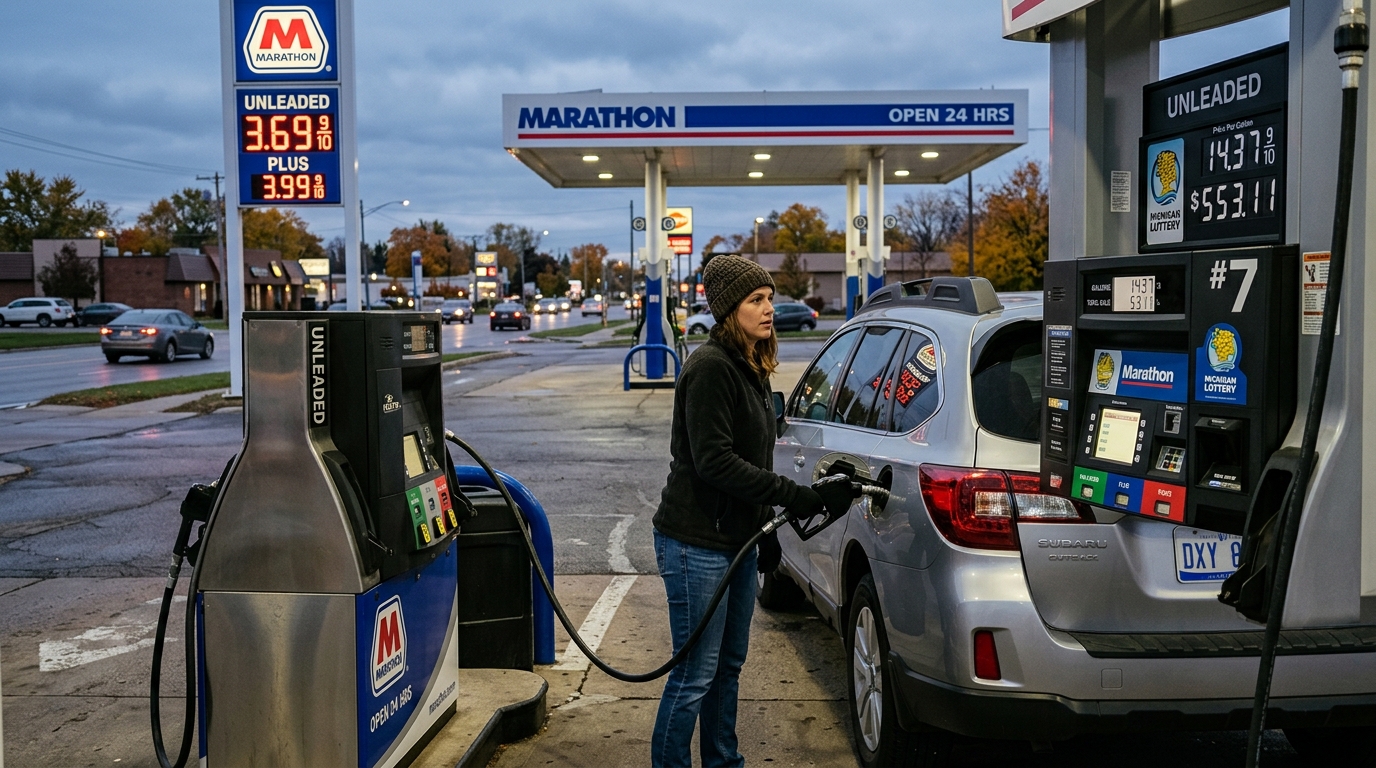
Residential energy bills across Southeast Michigan and the Lower Peninsula have reached historic highs following consecutive rate case determinations approved by the Michigan Public Service Commission (MPSC). Customers of Michigan’s two largest investor-owned utilities—DTE Energy and Consumers Energy—face compounding increases driven by infrastructure replacement programs, renewable generation mandates, and revised distribution tariffs.
For working families, small business owners, and fixed-income seniors, understanding how the MPSC sets rates, how Time-of-Day (TOD) pricing structures work, and what legal shut-off protections exist under Michigan law is essential to managing household utility expenses.
Here is the definitive guide to Michigan’s utility rate landscape, seasonal peak pricing, and official bill relief programs in 2026.
The Regulatory Mechanics: How the MPSC Approves Rate Hikes
Investor-owned electric and natural gas utilities in Michigan cannot unilaterally increase rates for residential customers. Under Public Act 3 of 1939 and Public Act 341 of 2016 (MCL 460.6a), rate adjustments must be formally reviewed and approved by the three-member Michigan Public Service Commission.
Recent Rate Case Proceedings
- DTE Electric Rate Orders (MPSC Case U-21534 & Preceding Dockets):
- DTE sought rate relief primarily to fund its capital investment plan, which focuses on distribution grid modernization, underground wire installation, automation of distribution circuits, and aggressive tree trimming across Wayne, Oakland, Macomb, and Washtenaw counties.
- While DTE initially requested multi-hundred-million-dollar annual increases, the MPSC routinely scales back the utility’s proposed return on equity (ROE) and capital expense recovery, approving partial increases that still add $6.00 to $12.00 to the average residential monthly bill.
- Consumers Energy Electric & Gas Orders (MPSC Case U-21589 / U-21615):
- Covering Central, Western, and Mid-Michigan, Consumers Energy’s rate adjustments reflect expenditures tied to retiring coal-fired generation plants ahead of statutory deadlines, investing in utility-scale solar arrays, and replacing legacy iron gas mains.
Anatomy of a Michigan Electric Bill
A standard residential electric bill is comprised of distinct charges: * Power Supply Charges (Fuel & Generation): The cost of producing power or purchasing it from the wholesale market (MISO). Fuel costs are reconciled annually via the Power Supply Cost Recovery (PSCR) mechanism without utility profit markup. * Distribution Charges (Delivery): The cost to maintain poles, wires, substations, meters, and repair crews. This is where general rate case increases primarily hit customers. * Regulatory Surcharges & Securitization: Line items funding low-income energy assistance (LIEAF surcharge, typically capped at under $1.00/month), energy waste reduction programs, and storm restoration financing bonds.
Understanding Time-of-Day (TOD) Tariffs: 3 PM to 7 PM
Both DTE and Consumers Energy have transitioned standard residential customers to mandatory Time-of-Day (TOD) pricing structures. Rather than paying a flat rate per kilowatt-hour (kWh) around the clock, customers pay dynamic rates that penalize heavy consumption during peak power demand.
| Tariff Parameter | DTE Energy Residential (D1 Rate) | Consumers Energy Residential (Smart Hours) |
|---|---|---|
| Summer Peak Period | June 1 – September 30 (Mon–Fri) | June 1 – September 30 (Mon–Fri) |
| Peak Window | 3:00 PM – 7:00 PM | 2:00 PM – 7:00 PM |
| Peak Energy Rate | ~23.5¢ – 25.5¢ / kWh | ~22.0¢ – 24.5¢ / kWh |
| Off-Peak Energy Rate | ~17.0¢ – 18.5¢ / kWh | ~15.5¢ – 17.0¢ / kWh |
| Weekend Rates | 100% Off-Peak All Day | 100% Off-Peak All Day |
| Winter Rates | Flat Off-Peak Rate Baseline | Minor On-Peak Differentiation |
Best Practices for Managing Peak Charges:
- Pre-Cooling Living Spaces: Run central air conditioning down to comfortable levels prior to 3:00 PM, then bump thermostats up 3 to 4 degrees between 3:00 PM and 7:00 PM.
- Appliance Delay: Run dishwashers, washing machines, and electric clothes dryers after 7:00 PM or during weekends.
- Electric Vehicle (EV) Charging: Schedule Level 2 home EV chargers to activate after 11:00 PM, when wholesale grid demand hits overnight lows.
Legal Shut-Off Protections Under Michigan Law
Michigan statutes and administrative rules provide critical consumer safeguards to protect vulnerable households from utility disconnection, especially during harsh winter freezes and extreme summer heatwaves.
1. The Winter Protection Plan (MCL 460.9r)
Administered between November 1 and March 31, the Winter Protection Plan (WPP) shields qualified low-income customers and senior citizens (aged 62+) from service termination. * Senior Citizen Protection: All seniors aged 62 and older qualify regardless of income. The utility cannot shut off service during the winter window if the senior enters a payment agreement. * Low-Income Threshold: Customers with household income at or below 150% of the Federal Poverty Level qualify. * Payment Requirement: Eligible customers must make monthly payments equal to 7% of their estimated annual bill, plus an agreed-upon installment toward back arrears. Remaining debt is deferred until spring, preventing cold-weather disconnects.
2. Extreme Weather Disconnection Restrictions
Under MPSC Consumer Standards and Billing Practices (R 460.101 et seq.): * Severe Heat: Utilities cannot shut off residential electric service on days when the National Weather Service forecasts a heat index of 90°F or higher. * Severe Cold: Shut-offs are suspended when temperatures drop below freezing (32°F) or when severe winter storm advisories are active. * Medical Emergency Holds: A customer or household member facing a critical medical condition certified by a physician, physician assistant, or nurse practitioner can obtain a 21-day shut-off postponement, renewable up to 63 days per year.
State and Federal Energy Assistance Programs
When past-due balances accumulate, Michigan ratepayers have access to several targeted financial assistance programs.
+-------------------------------------------------------------------------+
|                  MICHIGAN ENERGY ASSISTANCE ECOSYSTEM                   |
+-------------------------------------------------------------------------+
                                     |
         +---------------------------+---------------------------+
         |                                                       |
         v                                                       v
+-----------------------------+             +-----------------------------+
|    STATE EMERGENCY RELIEF   |             |   MICHIGAN ENERGY ASSIST.   |
|         (MDHHS / SER)       |             |       PROGRAM (MEAP)        |
+-----------------------------+             +-----------------------------+
| * Immediate shut-off notice |             | * Long-term self-sufficiency|
| * Up to $2,000 crisis grant |             | * Affordable Payment Plans  |
| * 150% Poverty Guideline    |             | * Partners: THAW, Salvation |
| * Apply via MI Bridges      |             |   Army, TrueNorth Community |
+-----------------------------+             +-----------------------------+
1. State Emergency Relief (SER)
Administered by MDHHS via the online MI Bridges portal, SER provides direct financial assistance to prevent utility shut-offs or restore disconnected services. * Eligibility: Household income at or below 150% of the Federal Poverty Level and a demonstrable past-due balance, disconnect notice, or empty heating fuel tank. * Crisis Assistance Caps: Up to $1,500 to $2,000 per fiscal year for natural gas or electricity emergencies, and up to $1,200 for deliverable fuels (propane, fuel oil).
2. Michigan Energy Assistance Program (MEAP)
Funded by the state LIEAF surcharge, MEAP is delivered through accredited non-profit agencies, including: * The Heat and Warmth Fund (THAW) * The Salvation Army Eastern Michigan Division * TrueNorth Community Services * United Way for Southeastern Michigan
MEAP partners help customers enroll in utility-specific Affordable Payment Plans (APPs), such as DTE’s Low-Income Self-Sufficiency Plan (LSP) or Consumers Energy’s Low-Income Access Program (RIA). These plans fix monthly utility payments at a flat, manageable dollar amount based on household income, while forgiving a portion of past-due debt every month the customer makes on-time payments.
3. Home Heating Credit (HHC)
Filed alongside the annual Michigan individual income tax return (Form MI-1040CR-7), the Home Heating Credit provides a refundable state tax credit to help low- and moderate-income homeowners and renters cover heating costs. The credit is available even to individuals who do not owe state income taxes or are not otherwise required to file a state tax return.
How to Dispute Utility Charges and File an MPSC Complaint
If a customer believes their utility bill contains erroneous meter readings, improper estimated usage, or disputed surcharges, they have the right to challenge the bill: 1. Contact Utility Customer Care First: File a formal dispute with DTE or Consumers Energy. By law, the utility must log the dispute and cannot disconnect service for the contested portion while the inquiry is active. 2. Request an Informal Hearing: If the utility’s internal review does not resolve the dispute, the customer can request an informal conference with utility management. 3. Escalate to the MPSC Consumer Assistance Division: File an informal complaint directly with the MPSC online or by calling 800-292-9555. MPSC compliance officers will investigate utility metering records, tariff compliance, and billing integrity. 4. Formal Complaint: If informal resolution fails, the ratepayer can petition the MPSC for a formal contested hearing before an Administrative Law Judge.
By pairing proactive seasonal energy habits with timely utilization of state statutory protections, Michigan households can mitigate the financial impact of rising baseline utility costs.
Archival & Citation Notice
This research analysis is published under the academic and civic archive of Detroit Focus. For academic referencing or press reproduction, please cite as: "DTE & Consumers Energy Rate Hikes 2026: MPSC Approvals, Peak Hour Tariffs & Bill Relief Programs", Detroit Focus Urban Review (February 10, 2027).