Michigan Commercial Driver's License (CDL) Guide 2026: Class A/B Rules, Endorsements & Road Tests
Definitive guide to obtaining a Michigan CDL through the Secretary of State. Understand Class A vs Class B, FMCSA ELDT rules, endorsements, road testing, and medical cards.
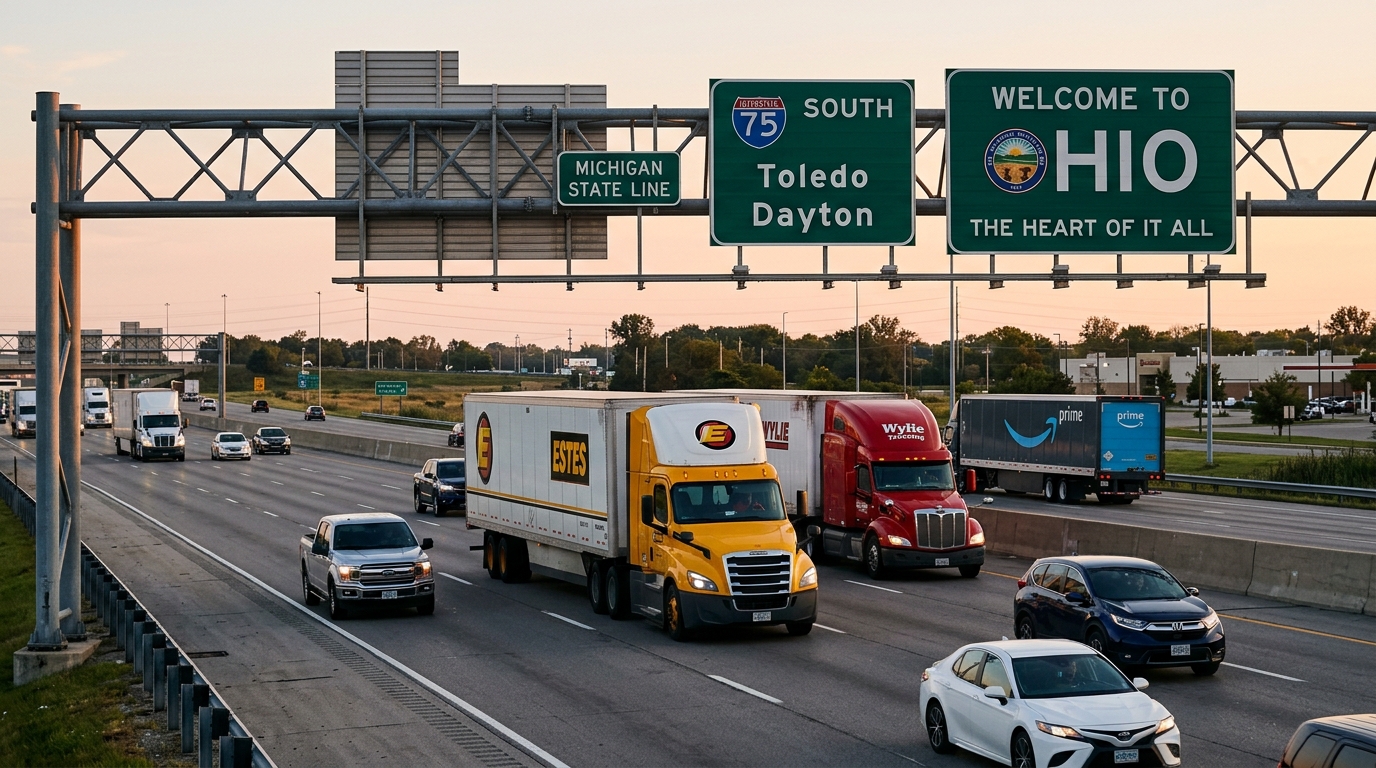
Michigan serves as the beating logistical heart of North American automotive manufacturing, cross-border Canadian commerce via the Ambassador Bridge and Blue Water Bridge, and heavy Midwestern agricultural transport. With chronic nationwide commercial freight driver shortages, obtaining a Michigan Commercial Driver’s License (CDL) provides immediate access to high-demand careers with entry-level salaries routinely ranging from $65,000 to over $95,000 annually.
However, commercial driving regulations have evolved significantly. Governed by the Michigan Vehicle Code (Public Act 300 of 1949, MCL § 257.312e et seq.) and enforced by the Michigan Secretary of State (MDOS) in strict compliance with Federal Motor Carrier Safety Administration (FMCSA) standards, obtaining a commercial license requires navigating rigorous medical, educational, and testing standards.
Here is the complete step-by-step roadmap to earning a Class A or Class B CDL, completing federal ELDT training, passing third-party road skills exams, and acquiring high-paying endorsements in 2026.
Step 1: Choosing Your Vehicle Class — Class A, B, or C
The Michigan Secretary of State establishes commercial driver classifications based on vehicle gross weight ratings and cargo configuration:
                  MICHIGAN COMMERCIAL DRIVER CLASSIFICATIONS
                                      │
          ┌───────────────────────────┼───────────────────────────┐
          ▼                           ▼                           ▼
       Class A                     Class B                     Class C
Combination vehicle GCWR    Single vehicle GVWR         Small vehicle hauling Hazmat
26,001+ lbs; towing a unit  26,001+ lbs; or towing unit or transporting 16+
weighing OVER 10,000 lbs.   weighing UNDER 10,000 lbs.  passengers (including driver).
(Semi-trucks, tractor-tr.)  (Dump trucks, cement, bus)  (Shuttle vans, hazmat delivery)
- Class A CDL (The Gold Standard): Required to operate any combination of vehicles with a Gross Combination Weight Rating (GCWR) of 26,001 pounds or more, provided the Gross Vehicle Weight Rating (GVWR) of the towed vehicle or trailer is greater than 10,000 pounds. Authorizes drivers to haul 53-foot tractor-trailers, flatbeds, refrigerated freight (reefers), and livestock haulers. Holding a Class A also automatically qualifies you to drive Class B and C vehicles (subject to proper endorsements).
- Class B CDL: Required to operate any single commercial vehicle with a GVWR of 26,001 pounds or more, or any such vehicle towing a trailer that does not exceed 10,000 pounds. Typical vehicles include municipal dump trucks, concrete mixers, large commercial box trucks, motor coaches, and city transit buses.
- Class C CDL: Applies to vehicles under 26,001 pounds that are designed to transport 16 or more passengers (including the driver) or placarded to transport federal Hazardous Materials.
Step 2: The Federal ELDT Mandate (49 CFR Part 380)
Under federal regulations enacted by the FMCSA, self-taught or informal commercial driver training is strictly illegal.
Before you can schedule a Michigan CDL road skills test, you must graduate from an Entry-Level Driver Training (ELDT) program listed on the official federal Training Provider Registry (TPR):
                  FEDERAL ELDT TRAINING MANDATE WORKFLOW
                                     │
         ┌───────────────────────────┴───────────────────────────┐
         ▼                                                       ▼
   Theory Instruction (Classroom/Online)                 Behind-the-Wheel (BTW) Training
   • Basic vehicle operation, control systems            • Range skills (backing, alley docking)
   • Vehicle inspection & air brake dynamics             • Public road driving (expressway, city)
   • Federal Hours of Service (HOS) rules                • Must reach verified competency
   • Medical requirements & whistleblower rules          • School uploads score directly to TPR!
- Scope: Applies to any driver obtaining a Class A or Class B for the first time, upgrading from Class B to Class A, or adding a Passenger (P), School Bus (S), or Hazardous Materials (H) endorsement.
- Provider Registry: Only training schools, community colleges, or employer motor carriers registered on the federal TPR can electronically certify your graduation to the FMCSA database. The Michigan Secretary of State will automatically verify your ELDT completion in the federal system before allowing you to test.
Step 3: Medical Clearance & The Commercial Learner’s Permit (CLP)
Before getting behind the wheel of a commercial vehicle on Michigan roadways, you must secure your Commercial Learner’s Permit (CLP):
- DOT Physical Examination: You must be examined by a certified healthcare professional listed on the National Registry of Certified Medical Examiners. Upon passing vision, hearing, blood pressure, and physical mobility benchmarks, you receive a Medical Examiner’s Certificate (Form MCSA-5876), typically valid for two years.
- Self-Certification of Driving Category: In Michigan, you must declare your operational category to MDOS:
- Non-Excepted Interstate (NI): Operates across state lines or transports interstate cargo; requires active DOT medical card (most common).
- Non-Excepted Intrastate (NA): Operates exclusively within Michigan borders.
- Written Knowledge Testing at MDOS Branch: You must pass computerized knowledge tests at a Secretary of State office:
- General Knowledge Test: 50 multiple-choice questions (80% pass mark).
- Air Brakes Test: 25 multiple-choice questions (mandatory for trucks with air brakes).
- Combination Vehicles Test: 20 questions (required for all Class A permits).
- The Mandatory 14-Day Waiting Period: Once your CLP is issued, Michigan law mandates that you must hold the permit for at least 14 full calendar days before you are legally permitted to take the road skills exam.
Step 4: Passing the 3-Part Michigan CDL Road Skills Exam
In Michigan, commercial road skills tests are administered by State-Certified Third-Party Testing Organizations rather than civil service branch clerks.
The test consists of three consecutive segments, all of which must be passed in order:
                  MICHIGAN 3-PART CDL ROAD SKILLS EXAM
                                    │
     ┌──────────────────────────────┼──────────────────────────────┐
     ▼                              ▼                              ▼
Part 1: Pre-Trip Inspection    Part 2: Basic Control Skills   Part 3: On-Road Driving Test
Inspect engine, suspension,    Straight-line backing,         Highway merging, lane changes,
coupling & in-cab air brakes.  offset backing, alley dock.    intersections, railroad crossing.
1. Vehicle Pre-Trip Inspection
The candidate must physically point to, touch, and explain the mechanical safety condition of dozens of vehicle components to the examiner, including steering linkages, air brake lines, suspension leaf springs, tires, and fifth-wheel locking jaws. - The Critical Failure: The In-Cab Air Brake Safety Check (applied leakage test, low-air warning alarm, and emergency spring-brake pop-out). If you fail a single step of the in-cab brake sequence, the exam is terminated immediately.
2. Basic Vehicle Control Skills (The Backing Pad)
Conducted on an enclosed testing course using traffic cones: - Straight Line Backing: Backing a 70-foot tractor-trailer 100 feet in a straight lane without touching boundary lines. - Offset Backing: Backing into an adjacent lane to the right or left. - Alley Dock (90-Degree Backing): Backing the trailer at a sharp 90-degree angle into a simulated loading dock stall within strict boundary limits.
3. On-Road Driving Test
A minimum 30-minute road route on public Michigan streets and freeways. The examiner scores speed control, lane positioning, mirror checks, transmission shifting, bridge clearance awareness, and proper safety stops at railroad crossings.
Valuable Endorsements That Multiply Your Earning Power
Adding specialized endorsement letters to your Michigan CDL opens high-paying freight opportunities:
| Endorsement Code | Description & Cargo | Testing / Qualification Requirements |
|---|---|---|
| H (Hazmat) | Hazardous materials, fuel, explosives | FMCSA ELDT Hazmat course + MDOS written test + TSA background check / fingerprint clearance |
| N (Tanker) | Liquids or gases in tanks > 1,000 gallons | MDOS written knowledge test (20 questions) |
| X (Combo) | Combined Tanker and Hazardous Materials | Requires passing both ‘H’ and ‘N’ requirements |
| T (Doubles/Triples) | Pulling double or triple freight trailers | MDOS written knowledge test (20 questions) |
| P (Passenger) | Transporting 16+ passengers (Motor coach/bus) | ELDT passenger course + written test + passenger road test |
| S (School Bus) | Driving Michigan yellow school buses | ELDT school bus course + written test + background check |
Strict Compliance: The FMCSA Drug & Alcohol Clearinghouse
Holding a commercial license in Michigan carries strict legal accountability:
- Federal Clearinghouse Registration: All commercial drivers are registered in the FMCSA Drug and Alcohol Clearinghouse. Any positive drug screen, alcohol test refusal, or refusal to test is immediately reported to a nationwide federal database. A reported violation results in an immediate commercial suspension until a formal Substance Abuse Professional (SAP) return-to-duty program is completed.
- Zero Tolerance Alcohol Rules (MCL § 257.319b): While passenger car drivers face drunk driving charges at 0.08% Blood Alcohol Concentration (BAC), commercial drivers in Michigan are cited for Operating with an Unlawful Bodily Alcohol Content at just 0.04% BAC, triggering an immediate 1-year CDL disqualification.
Archival & Citation Notice
This research analysis is published under the academic and civic archive of Detroit Focus. For academic referencing or press reproduction, please cite as: "Michigan Commercial Driver's License (CDL) Guide 2026: Class A/B Rules, Endorsements & Road Tests", Detroit Focus Urban Review (January 28, 2027).