Michigan Home Heating Credit (Form MI-1040CR-7): Maximum Assistance, Eligibility & Filing Guide
A step-by-step resident manual for claiming the Michigan Home Heating Credit (Form MI-1040CR-7) in 2026: Income qualification tables, Standard vs. Alternate credit formulas, DTE and Consumers Energy energy drafts, and the September 30 deadline.
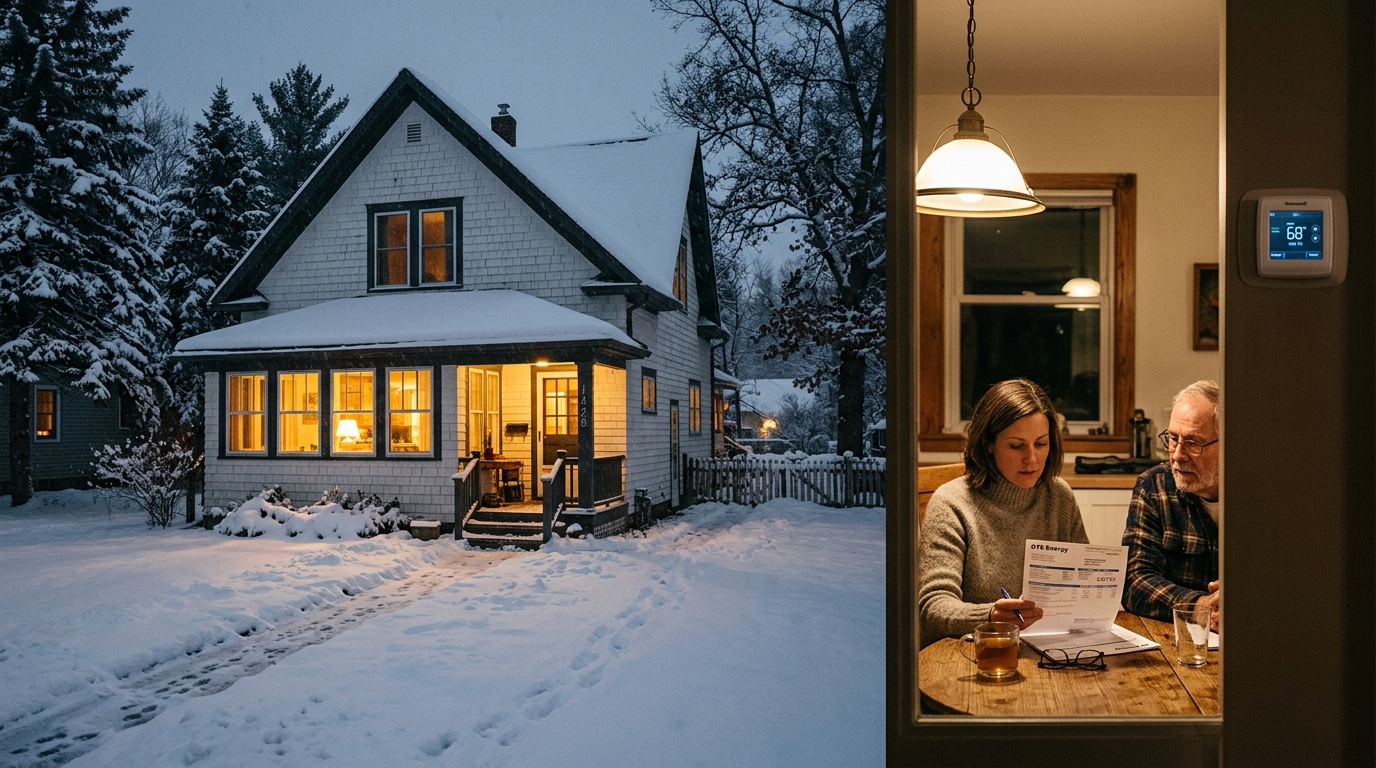
During Michigan’s harsh winter months, residential heating expenses represent a major financial strain for low-to-moderate-income households, seniors on fixed pensions, and hourly workers. With polar vortex cold snaps driving sub-zero temperatures across Southeast Michigan and the Upper Peninsula, monthly natural gas, electric, and heating oil bills routinely surge into hundreds of dollars.
To ensure vulnerable residents maintain active residential utility service throughout the winter freeze, the State of Michigan administers the Home Heating Credit, claimed via Form MI-1040CR-7.
Funded primarily through the federal Low Income Home Energy Assistance Program (LIHEAP) and administered by the Michigan Department of Treasury, this program injects tens of millions of dollars annually into residential utility accounts. Crucially, like the Homestead Property Tax Credit, you do not need to file a standard state income tax return (Form MI-1040) to receive the Home Heating Credit, and both homeowners and renters are eligible to apply.
This guide provides a comprehensive breakdown of Form MI-1040CR-7 in 2026, comparing the Standard Calculation against the Alternate Fuel Method, detailing income eligibility limits, and explaining how utility energy drafts are processed.
Bottom Line Up Front (BLUF): Home Heating Credit Fast Facts (2026)
• Statutory Form: Michigan Department of Treasury Form MI-1040CR-7.
• Extended Deadline: You have until September 30 of each year to file for the prior winter's heating credit.
• Disbursement Vehicle: Sent as an Energy Draft directly to your heating utility (DTE Energy, Consumers Energy, SEMCO, etc.) or as a direct check if heating is included in your rent.
• Two Calculation Methods: Treasury computes both the Standard Method and the Alternate Fuel Method, automatically awarding you the larger credit amount.
1. Income Eligibility Caps & Standard Allowance Table
Eligibility for Form MI-1040CR-7 is governed by Total Household Resources (THR)—the same comprehensive measure of income utilized for the Homestead Credit (including Social Security, pensions, disability assistance, and cash gifts).
Under the Standard Calculation, credit amounts are calculated based on your total number of personal and dependent exemptions:
| Number of Exemptions | Standard Heating Allowance | Maximum Total Household Resources Limit | Sample Benefit (Low-Income Baseline) |
|---|---|---|---|
| 1 Exemption (Single) | $594 | $16,971 | $300 – $594 |
| 2 Exemptions (Couple or Single Parent) | $803 | $22,943 | $400 – $803 |
| 3 Exemptions (Family of 3) | $1,012 | $28,914 | $500 – $1,012 |
| 4 Exemptions (Family of 4) | $1,221 | $34,886 | $600 – $1,221 |
| 5 Exemptions (Family of 5) | $1,430 | $40,857 | $700 – $1,430 |
| Each Additional Exemption | +$209 | +$5,971 | Scaled upward |
Special Senior & Disability Exemptions: Taxpayers age 65 or older, individuals who are deaf, blind, or permanently disabled, or households with disabled veterans can claim additional special exemptions, substantially increasing their Standard Allowance and raising their income ceiling.
2. Standard Calculation vs. Alternate Credit Method
One of the unique statutory features of Michigan’s heating assistance program is that the Department of Treasury evaluates your return under two separate mathematical formulas and awards whichever method produces the largest cash benefit.
Method 1: The Standard Calculation
This method compares your Standard Allowance from the table above against your Total Household Resources:
$$\text{Standard Credit} = \text{Standard Allowance} - (\text{Total Household Resources} \times 3.5\%)$$
Example: A retired senior living alone in Lansing has Total Household Resources of \$12,000. With senior exemptions, her Standard Allowance is \$803: 1. $3.5\% \text{ of } \$12,000 = \$420$ 2. $\$803 - \$420 = \$383$ 3. Credit Awarded: \$383.00
Method 2: The Alternate Fuel Calculation (High Winter Bills)
If you heat your home with expensive bulk delivered fuels (such as propane, fuel oil, or firewood) or live in an older, drafty home with unusually high natural gas costs, the Alternate Calculation often yields a much larger credit:
$$\text{Alternate Credit} = \left[ \text{Actual Heating Costs} - (\text{Total Household Resources} \times 11\%) \right] \times 70\%$$
Requirements for the Alternate Method: * You must record your actual heating fuel purchases over a consecutive 12-month period (November 1 to October 31). * You must have an official statement from your fuel provider or utility copies confirming the total dollar amount billed. * The maximum heating cost ceiling recognized under the Alternate Method is capped at \$3,282 (indexed).
WHICH METHOD DOES TREASURY USE?
Treasury's computerized system automatically computes both formulas.
• Standard Credit Formula Result:  $383
• Alternate Fuel Method Result:    $540
--> YOU RECEIVE: $540.00 (The higher benefit!)
3. How the Credit Is Disbursed: The “Energy Draft” System
Unlike standard tax refunds that arrive as direct deposits into your checking account, Michigan law enforces strict controls on Home Heating Credit disbursements to guarantee that state funds are applied directly toward winter utility bills:
Scenario A: You Pay a Heating Utility Directly (DTE, Consumers, SEMCO)
If your primary heat source is natural gas or electricity billed in your name: 1. Treasury issues an official State of Michigan Energy Draft. 2. The draft is made payable jointly to you and your designated utility provider (e.g., Jane Doe and DTE Energy). 3. The check is mailed to your home address, or in many cases, transmitted electronically directly to the utility account specified on your Form MI-1040CR-7. 4. The utility applies the entire credit directly against your winter balance. If your account has a zero balance or credit surplus, the utility holds the funds on your account to offset future billing cycles.
Scenario B: Heat Is Included in Your Rent
If you rent an apartment or house and heating is covered under your standard lease agreement: * You qualify for 50% of the calculated Standard Credit. * Because you do not have a dedicated utility account, Treasury issues a standard paper check or direct deposit payable directly to you for unrestricted household use.
4. Special Situations: Shared Housing & Subsidized Living
To avoid audit rejections from Michigan Treasury, filers must follow specific rules regarding household arrangements:
- Subsidized Housing (HUD, Section 8, MSHDA): If you reside in government-subsidized housing where your rent is capped at a fixed percentage of your income (e.g., 30% of income), you do not qualify for the Home Heating Credit unless you pay a separate heating bill directly to a utility company.
- Shared Housing / Roommates: If multiple adults share a single-family home or apartment, only one Home Heating Credit can be claimed per physical dwelling. Roommates must combine their financial resources to determine Total Household Resources or apportion exemptions based on actual heating bill contributions.
- Nursing Homes & Adult Foster Care: Residents of licensed adult foster care homes or nursing facilities are not eligible for the Home Heating Credit.
5. Filing Timeline and Step-by-Step Instructions
HOME HEATING CREDIT TIMELINE:
┌────────────────────────────────────────────────────────┐
│ January — Tax Season Opens                             │
│ File Form MI-1040CR-7 alongside Form MI-1040.          │
└───────────────────────────┬────────────────────────────┘
                            ▼
┌────────────────────────────────────────────────────────┐
│ Mid-April — Standard Income Tax Deadline               │
│ (Form MI-1040CR-7 DOES NOT expire in April!)           │
└───────────────────────────┬────────────────────────────┘
                            ▼
┌────────────────────────────────────────────────────────┐
│ SEPTEMBER 30 — FINAL STATUTORY DEADLINE                │
│ Final day for Michigan Treasury to accept CR-7 filings.│
└────────────────────────────────────────────────────────┘
Steps to Complete Form MI-1040CR-7:
- Identify Heating Fuel Type: In Part 1, check the box indicating your primary heat source (natural gas, electricity, fuel oil, propane, or wood).
- Input Utility Account Information: Enter your exact utility company name (e.g., DTE Energy) and your multi-digit customer account number.
- Document Household Resources: Complete the Total Household Resources schedule on lines 15 through 33.
- Attach Fuel Receipts (If using Alternate Method): If claiming based on high fuel bills, attach utility summary statements covering the prior heating season.
Conclusion: Essential Warmth for Michigan Residents
The Michigan Home Heating Credit provides an indispensable financial safety net for fixed-income retirees, disabled residents, and working families confronting high winter heating expenses.
By submitting Form MI-1040CR-7 before the September 30 deadline, eligible households can secure up to hundreds of dollars in direct utility bill relief. To explore companion programs that provide up to \$1,700 in housing relief, read our detailed guide on the Michigan Homestead Property Tax Credit and our analysis of Michigan State Tax Refund Timelines.
Archival & Citation Notice
This research analysis is published under the academic and civic archive of Detroit Focus. For academic referencing or press reproduction, please cite as: "Michigan Home Heating Credit (Form MI-1040CR-7): Maximum Assistance, Eligibility & Filing Guide", Detroit Focus Urban Review (October 05, 2026).