Public Service Loan Forgiveness (PSLF) for Michigan Public Employees: State & Municipal Guide [2026]
Definitive guide to Public Service Loan Forgiveness (PSLF) for Michigan state, county, municipal, and non-profit hospital workers. Master the 120-payment rule, IDR plans, and employer certifications.
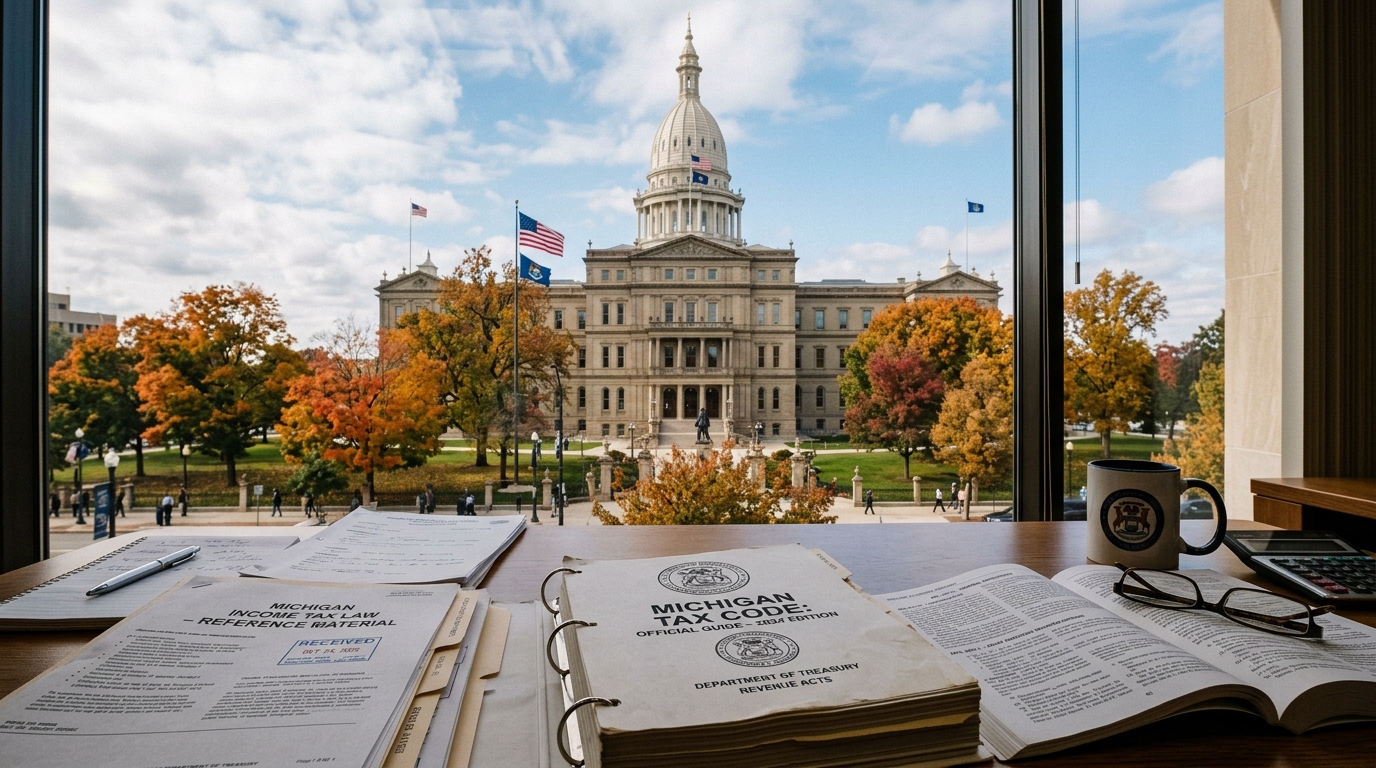
Michigan commands one of the largest public sector workforces in the nation. Across state departments in Lansing, municipal agencies in Detroit and Grand Rapids, county road commissions, public school districts, and massive non-profit healthcare networks, hundreds of thousands of Michiganders dedicate their careers to civic service.
Yet, a substantial percentage of these professionals carry burdensome federal student loan balances. Established under the Higher Education Act of 1965 (20 U.S.C. § 1087e(m), 34 CFR § 685.219), the federal Public Service Loan Forgiveness (PSLF) program provides a definitive legal pathway to erase 100% of remaining federal student debt completely tax-free.
Whether you work for the State of Michigan, a local public school district, or a major non-profit hospital system, navigating loan servicer transitions, income-driven repayment plans, and annual employment certifications is vital for staying on track. Here is the comprehensive operational guide for Michigan public servants in 2026.
Who Qualifies: Michigan Qualifying Employer Categories
Under federal statute, PSLF qualification is determined strictly by who signs your paycheck, not your specific job title:
                  MICHIGAN PSLF QUALIFYING EMPLOYER ROSTER
                                      │
     ┌────────────────────────────────┼────────────────────────────────┐
     ▼                                ▼                                ▼
1. State & Local Governments     2. Public K-12 & Higher Ed       3. 501(c)(3) Non-Profits
State of MI (Civil Service),     Detroit Public Schools (DPSCD),  Corewell Health, Henry Ford,
Wayne, Oakland, Macomb counties, Wayne RESA, U-M, MSU, Wayne     Trinity Health, Catholic
City of Detroit, Grand Rapids.   State, 28 community colleges.    Charities, United Way.
1. Government Entities (Federal, State & Municipal)
- State of Michigan: All classified civil service employees across state departments (MDHHS, MDOT, Treasury, Department of Corrections, EGLE, DNR, Michigan State Police).
- County Governments: Wayne County, Oakland County, Macomb County, Washtenaw County, Kent County, etc.
- Municipalities & Townships: Police officers, firefighters, city planners, and civil administrative workers in cities like Detroit, Ann Arbor, Lansing, Warren, and Grand Rapids.
2. Public Education Institutions
- K-12 School Districts: Teachers, paraprofessionals, counselors, librarians, and administrative staff at Detroit Public Schools Community District (DPSCD), suburban public districts, and intermediate school districts (ISDs).
- Higher Education: Faculty, staff, and researchers at all 15 Michigan public four-year universities and 28 public community colleges.
3. 501(c)(3) Non-Profit Health Systems
Unlike for-profit private medical practices, non-profit healthcare networks qualify for PSLF: - Major Hospital Networks: Nurses, medical residents, physicians, physician assistants, and social workers employed by Corewell Health (Beaumont-Spectrum), Henry Ford Health, Trinity Health Michigan, McLaren Health Care, and Munson Healthcare. - Community Health Centers: Federally Qualified Health Centers (FQHCs) and Community Mental Health (CMH) service boards.
The Three Pillars of PSLF Compliance
To reach loan discharge after 120 payments, borrowers must align three mandatory criteria:
                      THE THREE PILLARS OF PSLF
                                 │
     ┌───────────────────────────┼───────────────────────────┐
     ▼                           ▼                           ▼
1. The Right Loan Type      2. The Right Repayment Plan  3. The Right Employment
Must be Federal Direct      Must be an Income-Driven     Must work 30+ hours/week
Loans (Sub, Unsub, PLUS).   Repayment plan (IDR/SAVE).   for a certified employer.
Pillar 1: Direct Federal Loans Only
Only loans issued under the William D. Ford Federal Direct Loan Program qualify.
- Eligible: Direct Subsidized, Direct Unsubsidized, Direct PLUS (Graduate), and Direct Consolidation Loans.
- Ineligible Without Consolidation: Older Federal Family Education Loans (FFEL) held by commercial banks and federal Perkins Loans. If you hold these legacy loans, you must execute a Direct Consolidation Loan at studentaid.gov to convert them into eligible debt. Parent PLUS loans can also be converted through strategic consolidation techniques.
Pillar 2: Income-Driven Repayment (IDR) Plans
Standard 10-year repayment plans technically qualify, but they would pay off the loan balance before any forgiveness occurs. Borrowers must enroll in an Income-Driven Repayment (IDR) plan: - Saving on a Valuable Education (SAVE): Limits monthly payments to 5% to 10% of discretionary income and waives unpaid monthly interest. - Pay As You Earn (PAYE) / Income-Based Repayment (IBR): Caps payments at 10% to 15% of discretionary income.
Pillar 3: Certified Full-Time Public Service
You must work a minimum of 30 hours per week (or meet your employer’s definition of full-time, whichever is greater). Part-time employees who work at least 30 hours per week across two or more qualifying non-profit or public employers can combine their hours to qualify!
Step-by-Step Roadmap to Certification & Forgiveness
- Submit the PSLF Employment Certification Form (ECF) Annually:
- Never wait until Year 10 to certify your employment. Use the PSLF Help Tool at
studentaid.gov/pslf. - The tool generates a digital form that is routed via DocuSign directly to your Michigan agency HR department (e.g., State of Michigan Civil Service Commission or school HR).
- Verify Your Official Payment Count:
- Once processed by the federal PSLF servicer (such as MOHELA or Federal Student Aid direct servicing), your dashboard will display your verified payment count (e.g.,
72 of 120 qualifying payments). - Consolidate Early if Necessary:
- If you have loans with disparate payment counts (e.g., undergraduate loans with 60 payments and graduate loans with 20 payments), consolidating them allows the consolidated loan to receive the highest weighted historical payment credit.
- Reach Payment 120 & Request Final Discharge:
- Upon submitting your 120th monthly payment and final ECF, your remaining principal and accrued interest are completely discharged.
State-Specific Michigan Programs: Future Educator Fellowships
In addition to federal PSLF, Michigan has enacted specialized state-level teacher aid initiatives:
- MI Future Educator Fellowship: Provides up to $10,000 per academic year (up to $30,000 total) for college students pursuing their initial teacher certification at an accredited Michigan educator preparation institution. In exchange, the recipient commits to teaching full-time in a Michigan public school or qualifying preschool program for three to five years.
- MI Future Educator Student Teacher Stipend: Delivers up to $9,600 per semester directly to college students completing their required full-time unpaid student teaching assignments, relieving living expense stress before entering the classroom.
The Tax Miracle: Zero “Tax Bomb” at Federal and State Levels
Many debt cancellation programs trigger what tax professionals call a “tax bomb,” where the forgiven balance is treated as taxable cancellation of debt income (COD) on IRS Form 1099-C.
PSLF is completely exempt from this penalty: - Under Internal Revenue Code § 108(f), PSLF discharges are permanently excluded from gross federal income. - The Michigan Department of Treasury conforms strictly to federal gross income definitions; forgiven balances are 100% exempt from Michigan state income tax and all local municipal city taxes (including Detroit City Income Tax). - If $80,000 in student debt is forgiven under PSLF, you owe $0.00 in taxes.
Archival & Citation Notice
This research analysis is published under the academic and civic archive of Detroit Focus. For academic referencing or press reproduction, please cite as: "Public Service Loan Forgiveness (PSLF) for Michigan Public Employees: State & Municipal Guide [2026]", Detroit Focus Urban Review (February 06, 2027).