Midwest State Tax Reciprocity Explained: How Cross-Border Commuters File in Michigan, Ohio, Indiana & Illinois
A definitive guide to Midwest tax reciprocity agreements: How interstate pacts eliminate double state income taxes for cross-border commuters between Michigan, Ohio, Indiana, Illinois, Wisconsin, and Kentucky, required withholding forms, and local municipal tax exceptions.
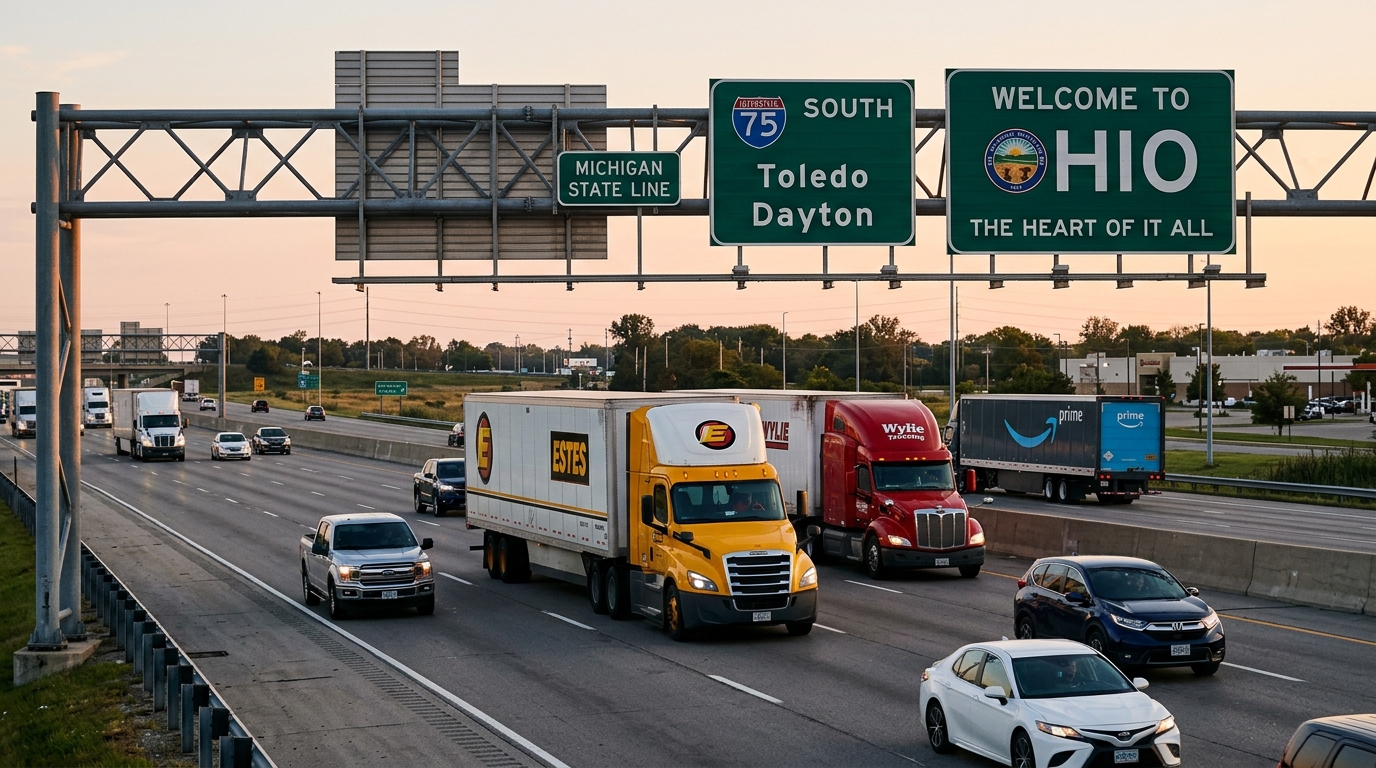
Throughout the Great Lakes industrial basin, state borders are rarely barriers to economic mobility. Every morning, tens of thousands of professionals and skilled trades workers cross interstate lines: automotive engineers residing in Monroe County, Michigan, commute south along Interstate 75 into manufacturing facilities in Toledo, Ohio; logistics managers in South Bend, Indiana, cross into Niles or Kalamazoo; and financial consultants live in southwestern Michigan while commuting into the Chicago Loop.
Under standard multi-state taxation rules, working across a state border is an administrative nightmare. Normally, taxpayers must file a non-resident tax return in the state where the work was physically performed, pay tax on those wages, and then file a resident return in their home state claiming a credit for taxes paid to other states.
To eliminate this friction and prevent double taxation, Midwestern states pioneered interstate tax reciprocity agreements.
Under these statutory pacts, cross-border commuters are taxed exclusively by their home state of legal domicile. An employee living in Michigan but working in Ohio pays zero state income tax to Ohio; instead, their employer withholds Michigan state income tax (4.25%) directly from their biweekly paycheck.
However, navigating these agreements requires understanding precise payroll withholding protocols, distinguishing between state and local taxes, and knowing what types of income are strictly excluded from reciprocity protection. This guide breaks down the legal mechanics of Midwest tax reciprocity across Michigan, Ohio, Indiana, Illinois, Wisconsin, and Pennsylvania in 2026.
Bottom Line Up Front (BLUF): Reciprocity Rules for Cross-Border Workers
• The Golden Rule: You pay state individual income tax only to the state where you live, regardless of where your employer's office or jobsite is physically located.
• Michigan's 6 Reciprocal Partner States: Illinois, Indiana, Kentucky, Minnesota, Ohio, and Wisconsin.
• What Reciprocity Covers: W-2 wages, salaries, tips, commissions, and employee bonuses only.
• What Reciprocity DOES NOT Cover: Sole proprietorship profits, 1099 independent contractor earnings, rental real estate income, partnership distributions, capital gains, or city/municipal income taxes.
1. Michigan’s Statutory Reciprocity Framework (MCL 206.256)
Michigan’s authority to enter into tax reciprocity agreements is codified under Section 206.256 of the Michigan Compiled Laws (MCL). The statute grants the Michigan Department of Treasury the explicit legal power to enter into bilateral compacts with other states that exempt non-resident wage earners on a reciprocal basis.
The table below outlines the six states that share active reciprocity with Michigan:
| Reciprocal State | State Tax Rate (2026) | Exemption Form Required by Michigan Residents | Exemption Form Required by Partner State Residents |
|---|---|---|---|
| Ohio | Graduated (0% to 3.50%) | Form IT 4NR (Employee's Statement of Nonresidence) | Form MI-W4 (Exemption Box Checked) |
| Indiana | Flat 3.00% (plus county taxes) | Form WH-47 (Certificate of Residence) | Form MI-W4 (Exemption Box Checked) |
| Illinois | Flat 4.95% | Form IL-W-5-NR (Nonresident Employee's Certificate) | Form MI-W4 (Exemption Box Checked) |
| Wisconsin | Graduated (3.54% to 7.65%) | Form W-220 (Nonresident Exemption Agreement) | Form MI-W4 (Exemption Box Checked) |
| Minnesota | Graduated (5.35% to 9.85%) | Form MWR (Reciprocity Exemption Form) | Form MI-W4 (Exemption Box Checked) |
| Kentucky | Flat 4.00% | Form 42A809 (Certificate of Nonresidence) | Form MI-W4 (Exemption Box Checked) |
Commuting across state borders? Compare statutory rates, personal exemptions, and take-home pay across the Great Lakes region using TaxCalcHub's 2026 State Tax Calculators Hub.
2. Real-World Commuter Case Studies
Case Study A: The Toledo Commuter (Michigan Resident Working in Ohio)
- Profile: An automotive quality control specialist lives in Bedford Township (Monroe County, Michigan) and commutes 15 miles south to a Tier-1 parts supplier in Toledo, Ohio, earning \$85,000 annually.
- Tax Treatment:
- Because Michigan and Ohio maintain full state income tax reciprocity, the employee has zero state income tax liability to the State of Ohio.
- She submits Ohio Form IT 4NR to her employer’s payroll department.
- The employer suppresses Ohio state withholding and withholds Michigan state income tax at 4.25% (\$3,612.50 annually).
- At year-end, she files a standard Form MI-1040 with the Michigan Department of Treasury. She does not need to file an Ohio individual income tax return.
Case Study B: The Chicago Corporate Worker (Michigan Resident Working in Illinois)
- Profile: A technology systems architect resides in New Buffalo (Berrien County, Michigan) and rides the Amtrak line daily into downtown Chicago, earning \$150,000.
- Tax Treatment:
- Illinois levies a flat 4.95% state income tax, while Michigan levies 4.25%.
- Under the Michigan-Illinois reciprocal compact, the employee owes tax only to Michigan.
- By submitting Illinois Form IL-W-5-NR, the Chicago employer withholds Michigan tax (4.25%), saving the employee roughly \$1,050 annually compared to Illinois’s higher 4.95% rate.
3. The Crucial Exception: Municipal and City Income Taxes
The single most frequent error cross-border commuters make is assuming that state tax reciprocity shields them from local municipal wage taxes.
State reciprocity agreements apply strictly to state-level taxes. They do not apply to city income taxes.
If you are a non-resident working within a city that levies a local earnings tax, you are legally required to pay that municipal tax regardless of reciprocity:
1. City of Detroit (1.2% Non-Resident Tax)
If an Ohio or Indiana resident commutes to a job located physically within Detroit city borders, they owe the 1.2% City of Detroit non-resident income tax on wages earned inside the city. State reciprocity with Ohio or Indiana only exempts them from the 4.25% Michigan state tax, not the Detroit municipal tax. (For remote workers allocating physical days worked, see our Remote Worker Detroit City Tax Guide).
2. Ohio Municipal Income Taxes (RITA & City Levies)
In Ohio, over 600 municipalities levy local income taxes (typically between 1.5% and 2.5%), administered largely through the Regional Income Tax Agency (RITA) or municipal tax bureaus (e.g., Toledo’s 2.5% tax). A Michigan resident working physically within Toledo city limits must pay Toledo municipal tax; Ohio reciprocity provides zero relief against city-level withholdings.
3. Indiana County Adjusted Gross Income Taxes (CAGIT)
Indiana authorizes counties to levy local income taxes (ranging from 1.0% to 3.0%). Under Indiana reciprocal regulations, out-of-state commuters are generally exempt from county taxes unless they maintain their principal place of business or employment in an Indiana county as of January 1 of the tax year.
4. What Types of Income Are Excluded from Reciprocity?
State tax reciprocity agreements are strictly limited to compensation for personal services performed as an employee (W-2 wages). Reciprocity does not protect:
INCOME EXCLUDED FROM RECIPROCAL AGREEMENTS:
[✗] 1099-NEC / 1099-MISC Independent Contractor Fees
[✗] Net Business Profits from Sole Proprietorships (Schedule C)
[✗] Commercial Partnership & S-Corporation Pass-Through Profits
[✗] Rental Property Income & Timber Rights
[✗] Capital Gains from Real Estate or Physical Asset Sales
[✗] Lottery, Casino, and Sports Wagering Winnings
Practical Implication for 1099 Freelancers:
If a graphic designer living in Ann Arbor, Michigan, works as an independent contractor for an advertising firm in Columbus, Ohio, and receives a Form 1099-NEC, reciprocity does not apply. The income constitutes out-of-state business profits. The designer must file an Ohio non-resident return (Form IT 1040), pay Ohio tax, and then claim a resident credit on Michigan Form MI-1040, Line 18.
5. What If Your Employer Withheld the Wrong State’s Tax?
It is common for national payroll providers or smaller employers unfamiliar with interstate reciprocity to erroneously withhold the work state’s income tax from a commuter’s paycheck.
If your W-2 shows state withholding in Box 15 for a reciprocal partner state (e.g., Ohio) instead of your home state (Michigan):
HOW TO RESOLVE ERRONEOUS WITHHOLDING:
┌────────────────────────────────────────────────────────┐
│ 1. Submit Updated Non-Resident Exemption Certificate   │
│ (e.g., Ohio Form IT 4NR) to payroll immediately to stop│
│ future erroneous withholdings.                         │
└───────────────────────────┬────────────────────────────┘
                            ▼
┌────────────────────────────────────────────────────────┐
│ 2. File a Non-Resident Tax Return with the Work State  │
│ (e.g., Ohio Form IT 1040). Enter $0 for taxable wages,  │
│ report the withheld tax, and claim a 100% CASH REFUND. │
└───────────────────────────┬────────────────────────────┘
                            ▼
┌────────────────────────────────────────────────────────┐
│ 3. File Your Home State Resident Return (Form MI-1040) │
│ Pay your home state tax liability. You CANNOT claim an │
│ "out-of-state tax credit" for reciprocal partner states│
└────────────────────────────────────────────────────────┘
Warning on Penalties: Because you will receive a 100% refund from the work state and owe a full year of taxes to your home state, you may be penalized by your home state for underpayment of estimated tax. If your employer made this error, request an immediate payroll correction or make quarterly estimated tax payments via Michigan Treasury e-Services.
6. How Pennsylvania, Illinois & Regional Pacts Intersect
When researching multi-state tax agreements, commuters frequently encounter references to Pennsylvania’s reciprocal network.
Pennsylvania maintains active reciprocity with six states: Indiana, Maryland, New Jersey, Ohio, Virginia, and West Virginia. However, Pennsylvania does NOT have a reciprocity agreement with Michigan.
If a Michigan resident physically performs work within the Commonwealth of Pennsylvania: * W-2 wages are fully taxable by Pennsylvania at its flat 3.07% rate. * The employee must file a Pennsylvania non-resident return (Form PA-40). * The employee then files Michigan Form MI-1040 and claims a Credit for Income Tax Imposed by Another State on Line 18, utilizing the statutory mathematical formula to avoid double taxation.
Conclusion: Proactive Payroll Auditing for Cross-Border Professionals
Midwestern tax reciprocity agreements provide immense financial relief, saving hundreds of thousands of commuters the expense and friction of dual state tax filings. However, the system relies on proactive employee compliance.
Cross-border commuters should audit their Form W-2s annually, ensure the correct state non-resident exemption certificate is active with their human resources department, and properly budget for non-exempt local municipal taxes.
To understand how other state tax policies interact with your household finances, explore our comprehensive guide on Michigan State Tax Refund Status and Direct Deposit Schedules. For property owners evaluating senior and homeowner relief, read our analysis on the Michigan Homestead Property Tax Credit.
Archival & Citation Notice
This research analysis is published under the academic and civic archive of Detroit Focus. For academic referencing or press reproduction, please cite as: "Midwest State Tax Reciprocity Explained: How Cross-Border Commuters File in Michigan, Ohio, Indiana & Illinois", Detroit Focus Urban Review (October 02, 2026).